
The very idea that there are tens of thousands of pressurised tubes criss-crossing the world’s skies is almost too much to imagine. The fact that these trips are generally less risky than a typical long-distance drive stretches belief even further. Yet, this is the reality of modern aviation.
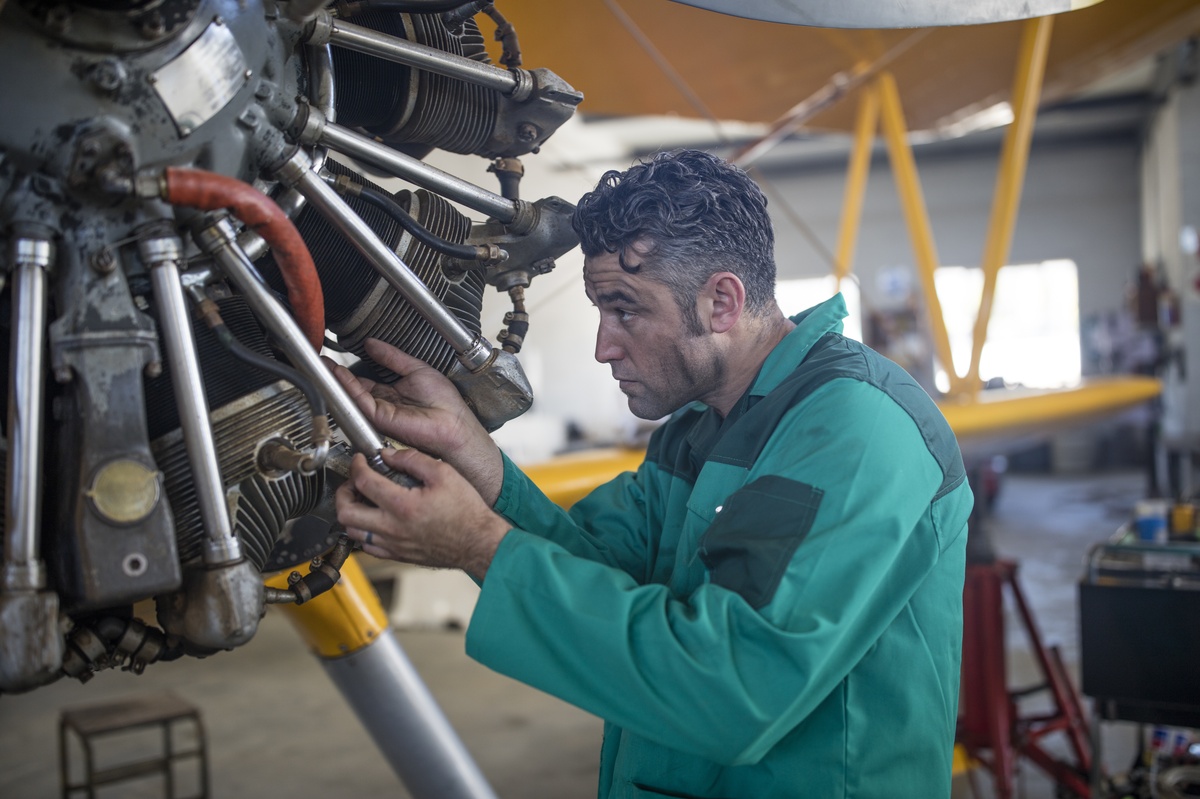
While advances in technology and pilot training have certainly much to do with the safety of routine air travel, air passenger safety, cargo delivery, and military readiness all largely depend on skilled teams maintaining near-unimaginable quantities of precision components at the highest possible standard. Without modern maintenance, repair, and overhaul (MRO) protocols, the skies would be far less safe than they are today.
Traditionally, however, MRO has come up against some practical limits. Even the most routine checks can be extremely resource-intensive and ground aircraft for hours or days. The high expense and downtime are necessary to guarantee safety, but they also disrupt operations and directly impact profitability. With the demand for aviation rising unabated, air fleet operators face mounting challenges. This is where predictive aircraft maintenance is emerging as a game-changer.
In This Article:
What Predictive Aircraft Maintenance Involves
While MRO best practices have historically experienced changes from year to year, predictive aircraft maintenance represents a complete shift in risk management. Traditionally, MRO involves maintaining components according to a fixed schedule where components are inspected or replaced at set intervals regardless of their true condition. While this guarantees safety, this necessarily results in unavoidable delays.
Predictive maintenance changes the equation by using data-driven insights to determine precisely when intervention is required. This involves collecting real-time data from an aircraft’s engines, avionics, and other critical systems. This data is then analysed through algorithms and machine learning models to detect patterns and potential anomalies. This allows operators to act only when needed, rather than too early or too late. This approach saves immense resources without negative impacts on compliance or safety requirements. Below are several key ways predictive maintenance is changing global aviation.
1. Detecting Problems Before They Escalate
A serious flaw of traditional inspections is that they can often only uncover issues once performance has noticeably degraded. Predictive systems, on the other hand, are able to flag subtle signs of wear and tear at the earliest stages, before pilots and maintenance crews notice anything. This enables air fleet operators to prevent much longer delays and higher costs associated with major failures.
2. Extending the Life of Aircraft Components
Replacing parts prematurely was and still is often seen as the necessary price of modern aviation safety. There is no question, however, that premature replacement based on estimated average lifecycles is highly inefficient, not to mention expensive.
With predictive maintenance, this inefficiency no longer needs to be a prerequisite for safety. It provides a clearer picture of each component’s actual condition, ensuring parts are replaced only when truly necessary, resulting in significant cost savings.
3. Reducing Unplanned Groundings
Unscheduled maintenance is extremely disruptive for air fleet operators. Because a fault can lead to a cascade of failures, serious delays, or expensive replacements are a common outcome for these events. Predictive models can help identify which planes are at risk of sudden failure, allowing maintenance teams to act in advance, resulting in fewer unexpected disruptions and more consistent flight schedules.
4. Supporting Military and Defence Operations
Predictive maintenance directly reduces time spent on the ground, increasing readiness while also improving the reliability of aircraft in demanding environments. This ensures that military operations are not easily compromised by preventable technical faults. As a major bonus, faster turnarounds enable smaller air fleets to have similar capabilities as larger ones, boosting the true defence capabilities of countries with smaller air arms.
5. Enabling More Efficient Use of Resources
Predictive maintenance doesn’t just cut down on component waste. Swapping out parts only when needed also reduces wasted time and manpower. With fewer low-level tasks to deal with, operations face fewer process bottlenecks and can be more productive. Maintenance schedules can also be further optimised to enable a better use of limited resources.
6. Lowering Overall Operational Costs
Lastly, predictive maintenance creates multiple positive impacts on the operators’ bottom lines. Reducing both the frequency and duration of downtime increases the time available for income-generating flights. At the same time, it enables smaller fleets to do the work of larger ones, potentially creating cash-saving opportunities through right-sizing. When used properly, the savings on spare parts, labour, and disruptions will more than offset initial investments in predictive systems.
Predictive Maintenance Is a Gamechanger, but Only with the Right MRO Partner
Shifting from reactive, wasteful fixes to proactive forecasting offers civilian and military air fleet operators massive jumps in capabilities. To put it simply, predictive MRO gives smaller fleets the practical capacity of larger ones, as more flights can be done safely with fewer aircraft.
Even so, predictive tools are only as effective as the people using the technology. To function at their full potential, these complex systems need to be handled by an experienced aircraft maintenance provider with proven MRO capabilities. Operators seeking to future-proof their fleets must partner with the right firm to ensure their predictive maintenance investments deliver on their promise rather than add new risks and complications.